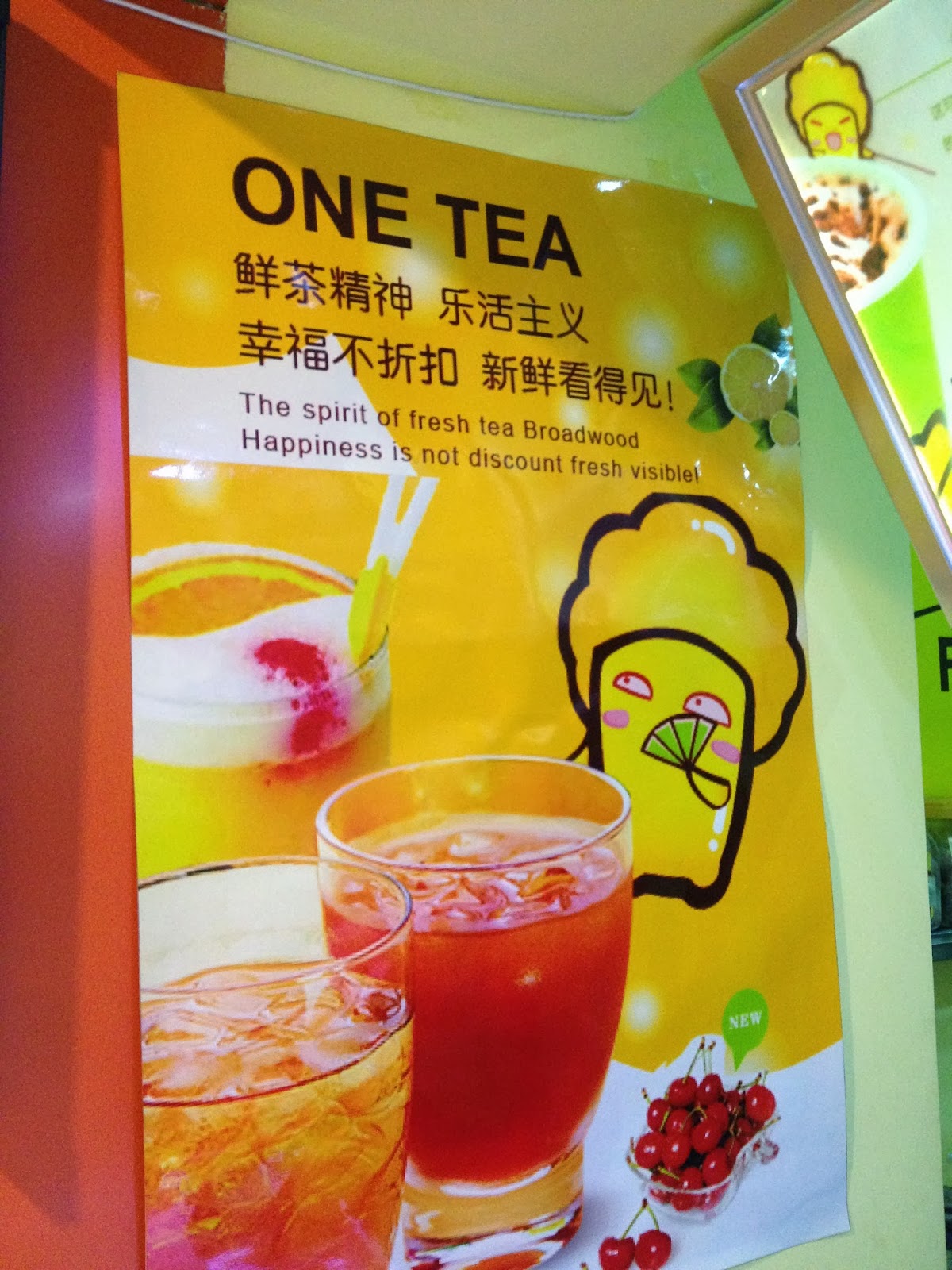
I know, being a bilingual person, that translations can be tricky, but I'm not always aware that they can be hilarious too.*
These were a few of the signs and menu items that we saw while in China. I believe they're self-explanatory (though thoroughly inexplicable and undecipherable).
Hubby reminded me to add that in the following sign, read the fine print in the yellow section:
Oddly, enough, there's a building on the Indiana University-Bloomington campus that has an inscription above the front door that sounds vaguely similar to this nonsense:
My older son loves this next one so much, he's using it as his FB profile pic:
Not nearly as hilarious, but very interesting in their own rights were signs around Hong Kong that kept people in line.
For hilarity in English, though, I recommend checking out the DamnYouAutocorrect site.
* I take no responsibility for you hurting yourself from laughing too much!
"I may not have gone where I intended to go, but I think I have ended up where I needed to be." ~ Douglas Adams
Showing posts with label language. Show all posts
Monday, January 13, 2014
Wednesday, March 11, 2009
Random Tuesday Facts - let's pretend it's stll Tuesday
This time, I thought we'd check out some actual language. :) So many people have asked me about the Cantonese-Mandarin distinction recently, that I thought I'd share a little here:
Mandarin and Cantonese are not two separate languages. They're both dialects of Chinese. In fact, there are many (I'm not sure of the exact number) Chinese dialects, most of which sound so different from each other that you'd not know they were from the same language. It's not at all like a Southern accent is different from a North-Eastern accent in the United States, where "twang" aside, it pretty much sounds the same (no southen accent jokes, please!).
"Simplified characters" notwithstanding, written Chinese is the same for all Chinese people, no matter where they live, so that even if you spoke an entirely different dialect than the region you're visiting, if you can read Chinese characters, you can essentially communicate with any other literate Chinese person by writing.
And what's in a word? Would a word by any other name smell as...confusing??
Cartoon by the brilliant Sidney Harris in the book You Want Proof? I'll Give You Proof!
"He is happiest, be he king or peasant, who finds peace in his home." ~ Johann von Goethe
Mandarin and Cantonese are not two separate languages. They're both dialects of Chinese. In fact, there are many (I'm not sure of the exact number) Chinese dialects, most of which sound so different from each other that you'd not know they were from the same language. It's not at all like a Southern accent is different from a North-Eastern accent in the United States, where "twang" aside, it pretty much sounds the same (no southen accent jokes, please!).
"Simplified characters" notwithstanding, written Chinese is the same for all Chinese people, no matter where they live, so that even if you spoke an entirely different dialect than the region you're visiting, if you can read Chinese characters, you can essentially communicate with any other literate Chinese person by writing.
And what's in a word? Would a word by any other name smell as...confusing??
Cartoon by the brilliant Sidney Harris in the book You Want Proof? I'll Give You Proof!"He is happiest, be he king or peasant, who finds peace in his home." ~ Johann von Goethe
Tuesday, February 24, 2009
Random Tuesday Facts
...because Julie (Cool Mom Guide) begged for it, and I hate to see her beg. Heh! Random facts are as good as random thoughts, right?
Today, we'll tackle the English language...but not too hard since I don't want it to get a concussion. I'd like to highlight the nit-picky distinctions between these pairs: Farther/Further, Eager/Anxious, Use/Utilize.
Farther refers to a greater physical distance, while further means to a great extent, or more.
Eager means to look forward to something, or a happy anticipation of something, while anxious means the nervous anticipation of something, not exactly looking forward to, but more of a dread. An easy way to remember the difference is that "anxious" come from the same root as "anxiety."
Use...well, you all know what that means, whereas utilize means to use something for a purpose for which it was not intended. See this page for a more detailed explanation and an example.
And to round off this intense lesson *snort*, I leave you with a funny (which I had first seen at Diane's Much of a Muchness blog) -
"He is happiest, be he king or peasant, who finds peace in his home." ~ Johann von Goethe
Today, we'll tackle the English language...but not too hard since I don't want it to get a concussion. I'd like to highlight the nit-picky distinctions between these pairs: Farther/Further, Eager/Anxious, Use/Utilize.
Farther refers to a greater physical distance, while further means to a great extent, or more.
Eager means to look forward to something, or a happy anticipation of something, while anxious means the nervous anticipation of something, not exactly looking forward to, but more of a dread. An easy way to remember the difference is that "anxious" come from the same root as "anxiety."
Use...well, you all know what that means, whereas utilize means to use something for a purpose for which it was not intended. See this page for a more detailed explanation and an example.
And to round off this intense lesson *snort*, I leave you with a funny (which I had first seen at Diane's Much of a Muchness blog) -
"He is happiest, be he king or peasant, who finds peace in his home." ~ Johann von Goethe
Subscribe to:
Posts (Atom)